It is a rainy spring day and a perfectly dreary time to visit a Civil War place in my book.
In Rattlesnake Granny: Nancy Remembers Life in Old Thornton Gap, my fictional version of Northern Shenandoah Valley mountaineer Nancy Pullum reflects:
I heard a young man was killed outside of the smaller town of Dayton up the Valley… Couse war is full of young men dying, but this one was an officer who worked for the Feds and his daddy was right important to the Union Army. When General Sheridan heard that young man was shot while out on a rainy morning just making maps, he about burnt down the town of Dayton for vengeance, they say. Some people said that some of the federal officers were goodhearted folks and talked Sheridan out of setting fire to the whole countryside. And many of the folks around in these parts were Dunkers [Church of the Brethren] and Mennonites who were a-farming and not doing anyone any harm. (p 17)
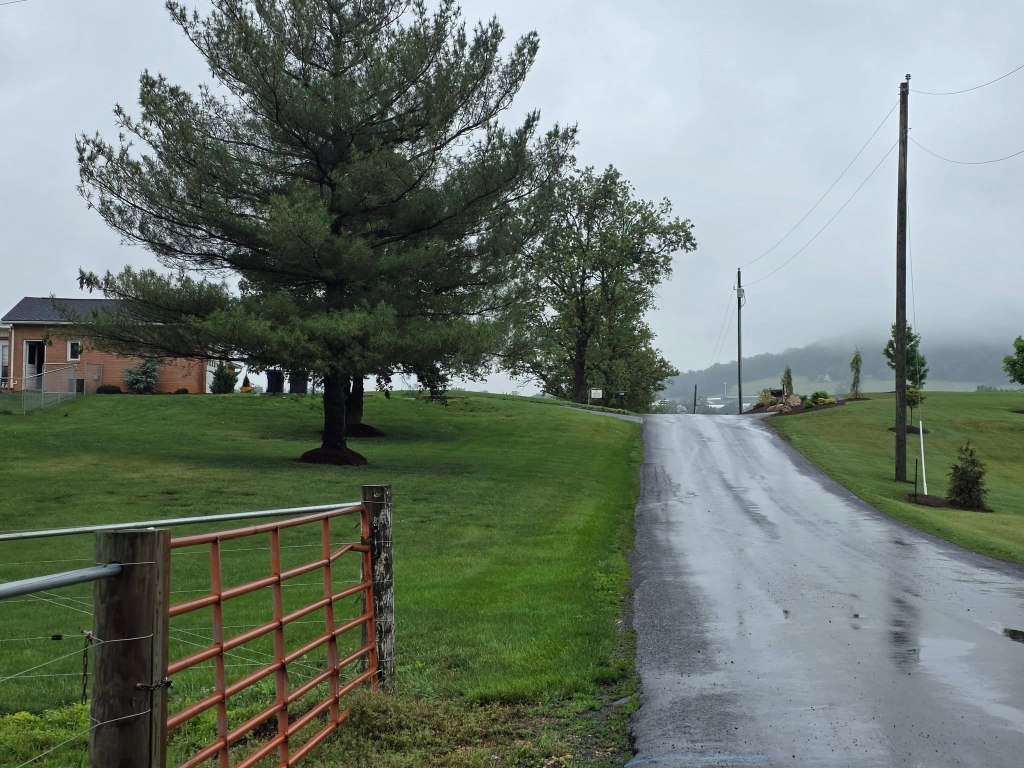
Let’s travel down the wet roads in Dayton to go there. That is Mole Hill, the remnants of an ancient volcano, shrouded in fog back there. As in Nancy’s time, many Old Order Mennonites live in this area of Rockingham County, Virginia.
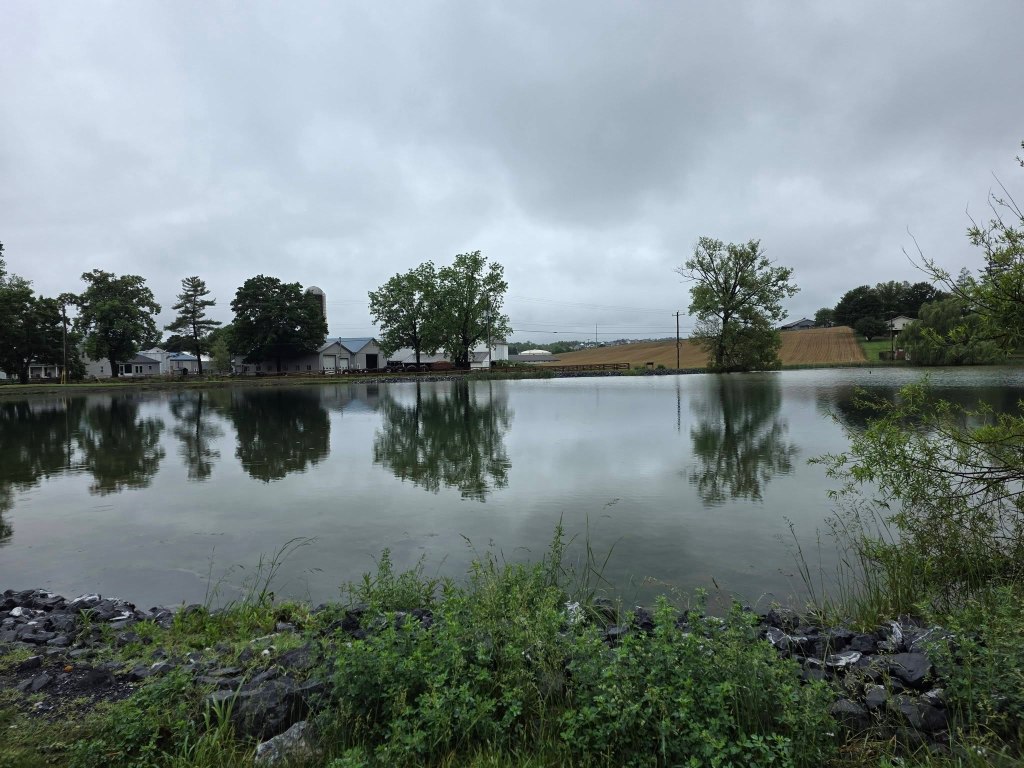
Going by Silver Lake with its old mill.
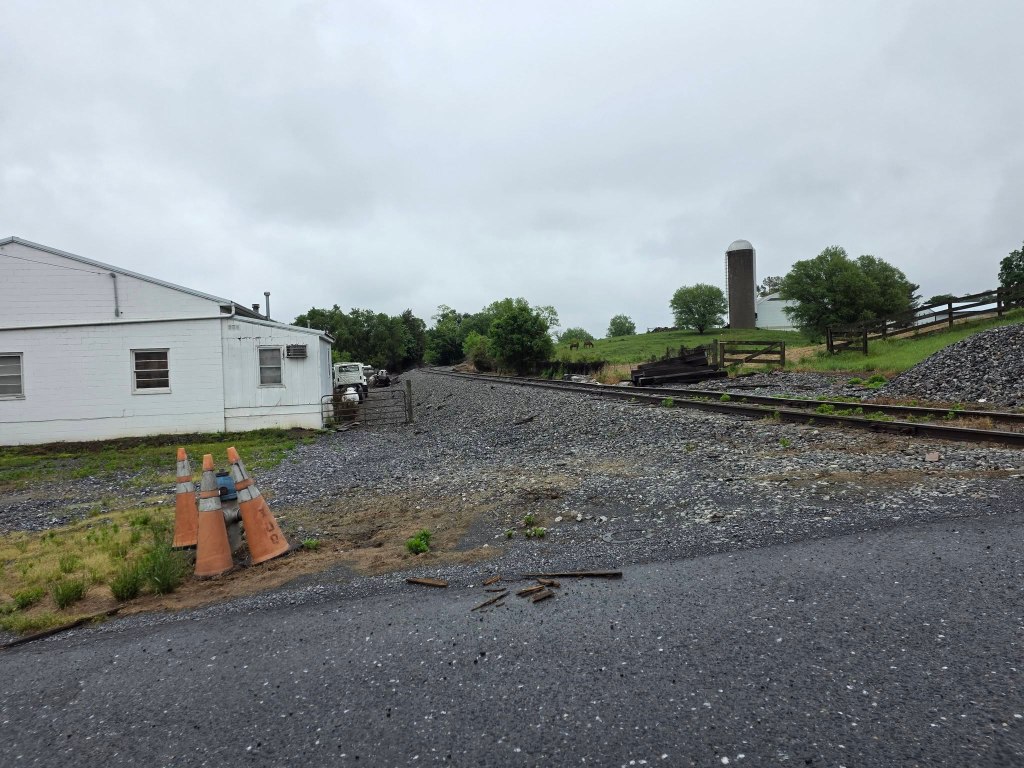
By the railroad tracks up Meigs Lane near the feed mill.
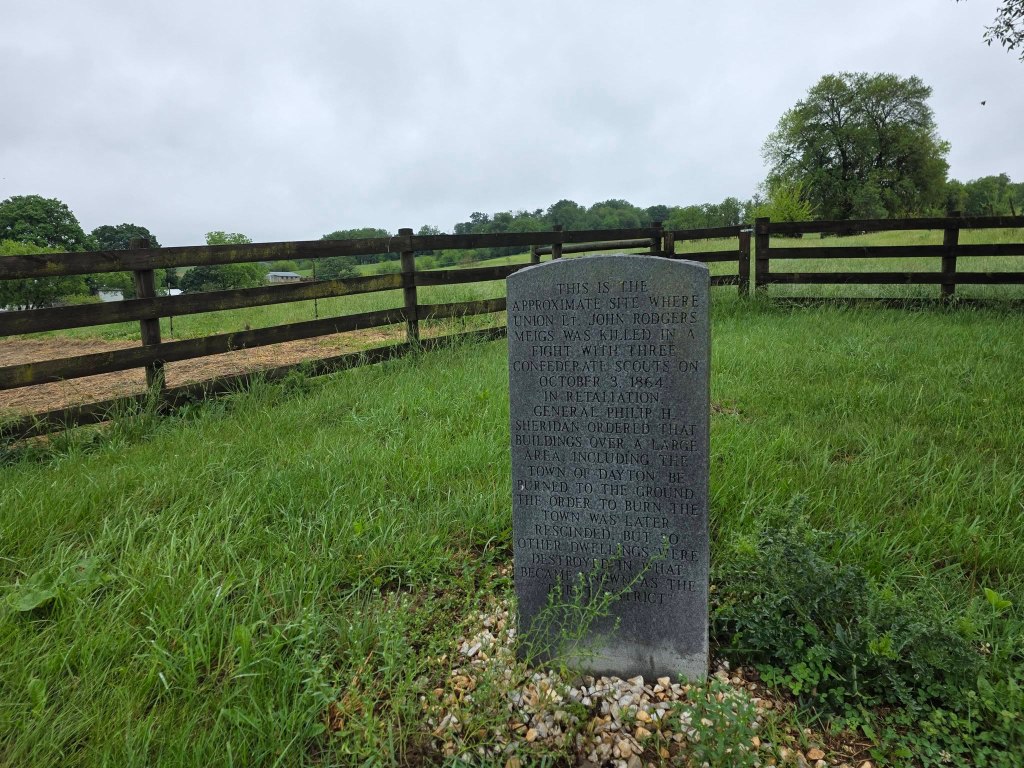
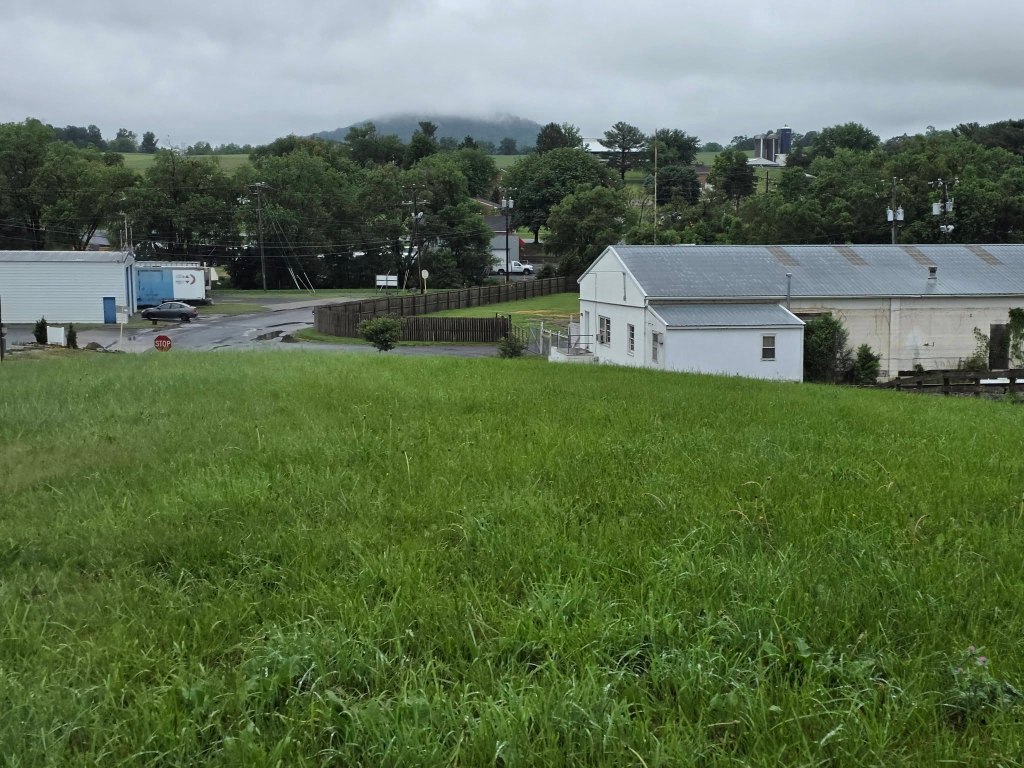
And we are here at the site where twenty-two-year-old First Lieutenant John Rodgers Meigs (February 9, 1842 – October 3, 1864) was killed while out on a scouting exposition for the Corps of Engineers, U.S. Army.
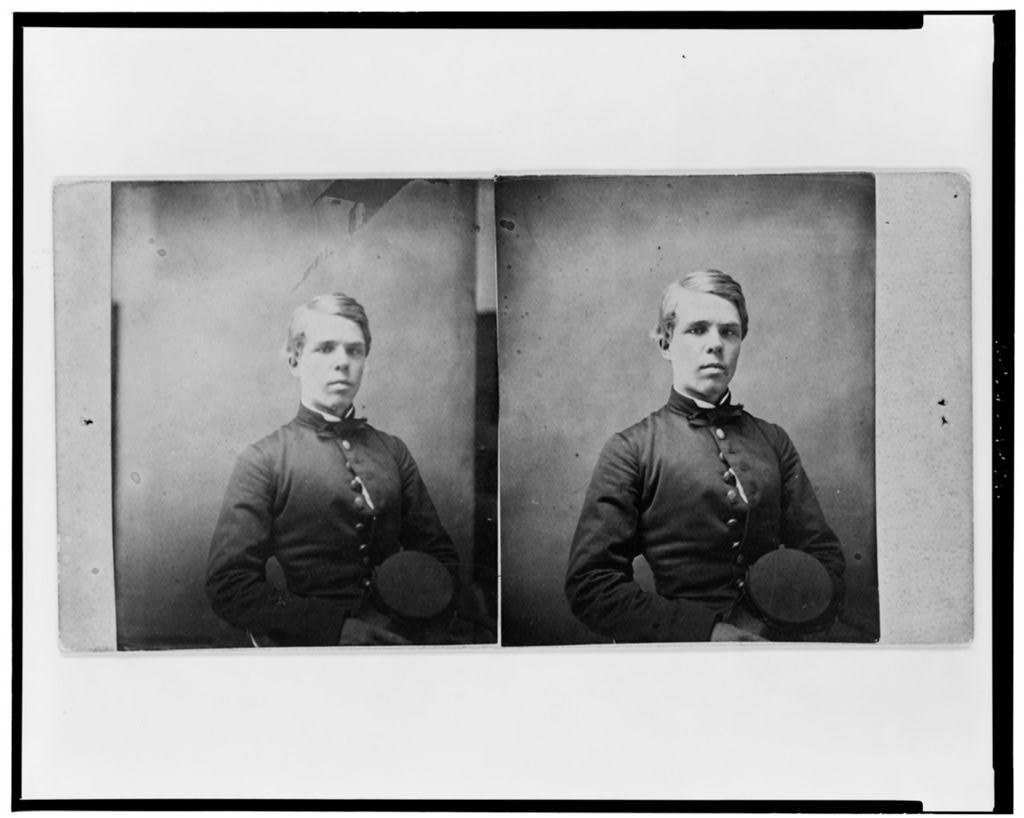
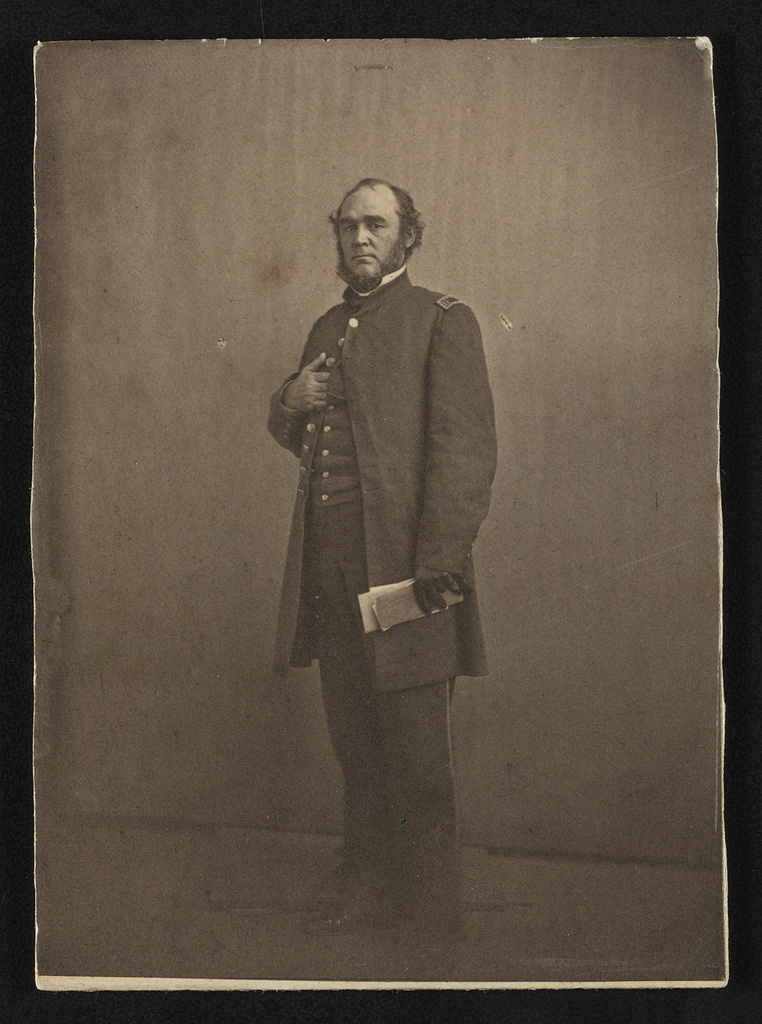
Here he is on a stereograph card at the Library of Congress.
And here is his father, Brigadier General Montgomery C. Meigs (May 3, 1816 – January 2, 1892), who was the Quartermaster General of the Union Army, also from the Library of Congress.
There are differing versions of what befell young Meigs, but on October 3, 1864, he and Union assistants were returning from a map-making scouting expedition (at dusk, not morning), when he was shot during a brief encounter with Confederate troops on a hill near Dayton, Virginia.
One version of the story says that the raincoats which the Confederate troops wore made for difficulties in identifying them as enlisted men and not Union troops or Confederate irregulars.
The tragedy of Meigs’ death caused a stir: he was young, he was the son of an influential officer and a talented engineer in his own right, a West Point graduate, and he was a favorite of Commanding General Phil Sheridan. Sheridan really did give orders to burn Dayton, which were later rescinded, possibly due to an entreaty from a Union officer.
Meigs was first buried at Oak Hill Cemetery in Washington, D.C., and later reinterred at Arlington National Cemetery. He rests with an elaborate bronze tomb cover, showing him lying in the rain and mud on that Shenandoah Valley autumn night.
The folks here in Dayton, Virginia, continue to be thankful to Lt. Col. Thomas F. Wildes of the 116th Ohio Volunteer Infantry, who is said to have pleaded the good folks of Dayton’s cause with General Sheridan and averted a fiery destruction of this area.
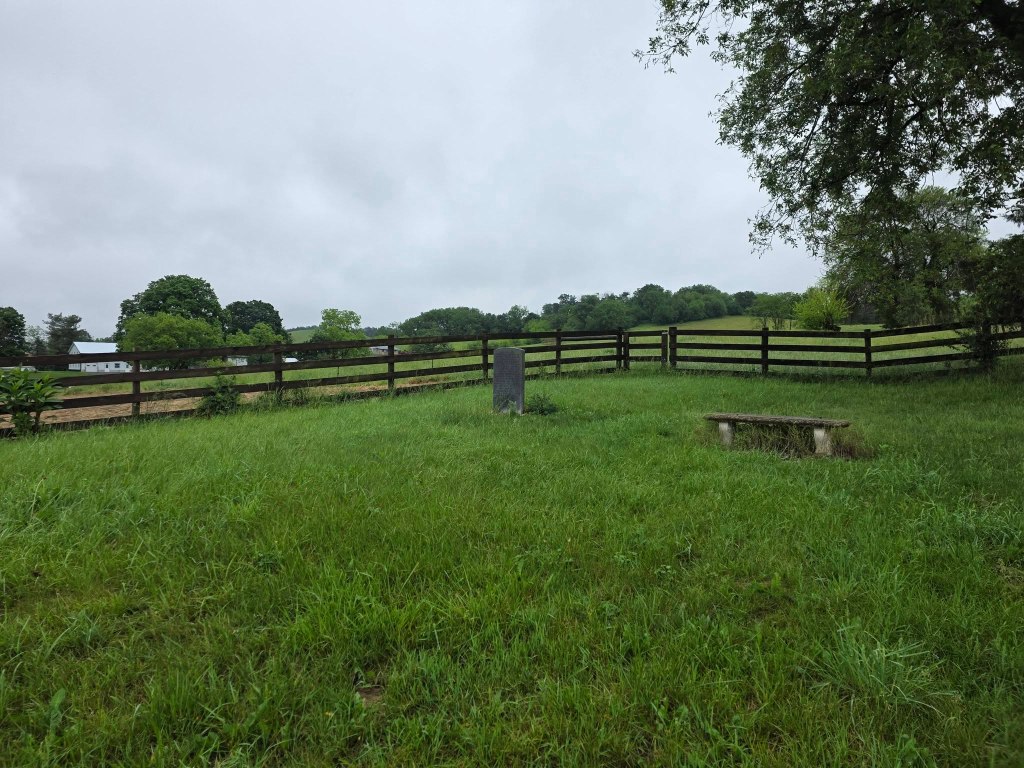
There is a marker where Meigs fell.
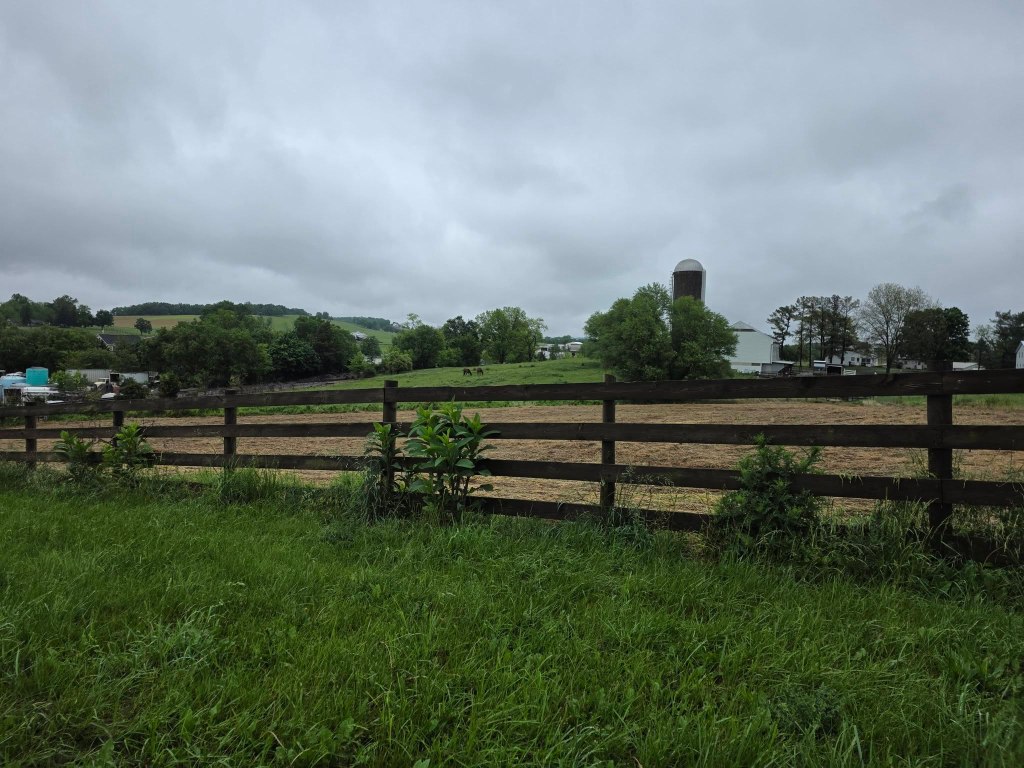
On this rainy holiday weekend, it is quiet on the lane that is still named for John Rodgers Meigs. There is a bench where you can sit and reflect. Birds are singing and the countryside is beautiful.
Wishing everyone a peaceful Memorial Day.
Historical photographs from Library of Congress Prints and Photographs Division Washington, D.C. 20540 USA
Modern photographs made by Stephanie S. Gardner on May 23, 2026
visit http://www.rattlesnakegranny.com for more information on my three little books about the history of Dayton and the Shenandoah Valley.



Leave a Reply